- Alumni
Our extensive network of alumni and friends include local and international graduates who have followed diverse career paths from research to primary care, industry to politics.
- Centre for Health, Exercise & Sports Medicine
A multidisciplinary research centre within the Faculty of Medicine, Dentistry and Health Sciences, combining high calibre researchers with experienced clinicians.
News & Events
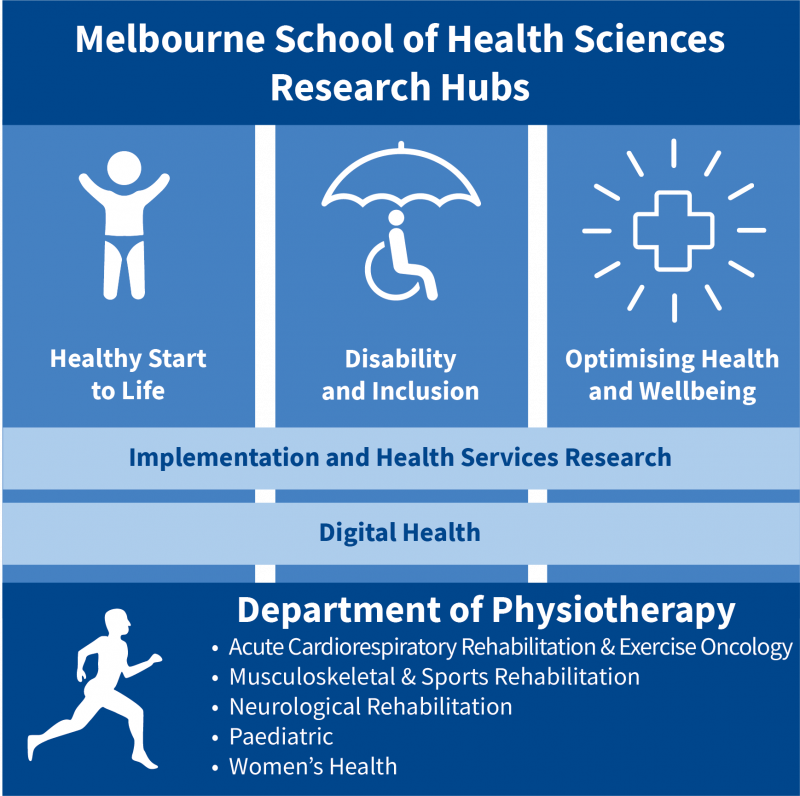
Department of Physiotherapy - Research
Research led by the department of physiotherapy has a strong focus on implementation and health services research across the lifespan, including the use of digital health to develop innovative models of care delivery and improve access to health care. Our research teams include internationally renowned researchers with outstanding competitive research grant success and top tier journal publications across the Melbourne School of Health Sciences research hubs.
Our researchers in the Healthy Start to Life hub partner closely with leading health services, institutes and health professionals to foster development, wellbeing and participation for children with, or at risk of, developmental challenges and their families. Researchers in the Disability and Inclusion hub work collaboratively with clinical partners and use health services research to improve the wellbeing of a individuals with a range of musculoskeletal, neurological and cardiorespiratory disorders across the lifespan . Our researchers in Optimising Health and Wellbeing hub focus on supporting those with chronic conditions, critical illness, cancer, pelvic floor disorders and following major surgery through knowledge translation, implementation science and health service research, including increasing access to care through telerehabilitation and digital health.
Explore our program of research
-
Acute cardiorespiratory and exercise oncology
This program of work focuses on generating and implementing new evidence regarding the role of physiotherapy, exercise, physical activity and rehabilitation to minimise disease burden and maximise patient outcomes in the areas of acute cardiorespiratory and cancer. The program has a strong focus on survivors of critical illness, as well as patients with cancer and those undergoing major surgery. The research program is based on the premise that targeted exercise training or rehabilitation is not commonly part of usual care or well understood for these patients, despite strong potential need and benefit. The research program includes studies conducted with both quantitative and qualitative methodologies and involves staff and research higher degree students. The studies are commonly conducted with several of our partner hospitals in Melbourne Australia, and with our strong international collaborators.
Researchers
Prof David Berlowitz
Chair in Physiotherapy at Austin Health | Research areas include sleep and breathing disorders in neuromuscular disease, health systems and data research, clinical trials of therapies and care modelsdjberl@unimelb.edu.auA/Prof Catherine Granger
Associate Professor and Dame Kate Campbell Fellow | Research areas include exercise and physical activity for patients with lung cancer, other cancers, critical illness and respiratory diseasescatherine.granger@unimelb.edu.auA/Prof Helena Frawley
Associate Professor | Research expertise in expertise in women’s health, specifically disorders related to the pelvic floorh.frawley@unimelb.edu.auDr Lara Edbrooke
Lecturer | Research areas include health services research, multi-disciplinary models of allied health care for people with cancer, measurement of physical activitylarae@unimelb.edu.auDr Jennifer Jones
Clinical Research Fellow | Research areas include critical care recovery and rehabilitation, frailty and digital healthjennifer.jones@unimelb.edu.auMs Shaza Abo
Clinical Research Fellow (Acute Cardiorespiratory) | Researching physical activity and exercise in cancer and critical illness; interested in quantitative and qualitative methodologies, co-design and sustainabilityshaza.abo@unimelb.edu.auGraduate Researchers
Georgina Whish-Wilson
Jess Crowe
Dominic Truong
Cassie McDonald
Shaza Abo
Jane Lockstone
Aruska D’Souza
Alisha da Silva
-
Paediatric physiotherapy
This program focuses on generating and implementing new evidence to promote development, wellbeing and participation for both children with and/or high risk of developmental difficulties/disabilities and their families. This program has two streams: i. early detection of neurodevelopmental outcomes and ii. early intervention, rehabilitation and physical activity to optimise outcomes. Our multi-disciplinary research has a broad range of expertise spanning the newborn period to adolescents, including preterm birth and cerebral palsy. It is a priority of our research team to involve consumers in all stages of the research process, collaborating with children, parents, clinicians, service providers and professional bodies. The research program includes studies conducted with both quantitative and qualitative methods, covering digital health, co-design and knowledge translation. The studies are commonly conducted with several of our partner hospitals in Melbourne Australia, including the Murdoch Children’s Research Institute, Royal Women’s Hospital and Victorian Paediatric Rehabilitation Service.
Researchers
Prof Alicia Spittle
Associate Dean (Research) Faculty of Medicine, Dentistry and Health Sciences | Her research interest include infant and child development, early intervention, parent well-being, consumer engagement and implementation scienceaspittle@unimelb.edu.auProf Jennifer McGinley
Head, Department of Physiotherapy | Research areas include movement and function across the lifespan in healthy people and those with neurological conditions including stroke, Parkinson’s disease, cerebral palsy and autism spectrum disordermcginley@unimelb.edu.auDr Rachel Toovey
Lecturer | Research areas including paediatrics, disability and inclusive participation in physical activityr.toovey@unimelb.edu.auDr Tara Fitzgerald
Lecturer | Research interests include physical activity participation in early childhood, and long-term outcomes for infants born pretermtara.fitzgerald@unimelb.edu.au
Dr Abbey Eeles
Research Fellow | Research areas include the impact of developmental therapy and early intervention on brain development and rehabilitation in the newborn period and beyond, and the role parents play in delivering this interventionabbey.eeles@unimelb.edu.au
Dr Amanda Kwong
Research Fellow | Research areas include early detection assessment and implementation of movement problems in high risk infantsamanda.kwong@unimelb.edu.auGraduate Researchers
Reem Albesher
Kate Cameron
John Carey
Free Coulston
Katy de Valle
Francyne Finlayson
Kate Rawnsley
-
Neurological rehabilitation & gerontology
Neurological disorders are a common cause of reduced capacity for everyday independence. Neurological rehabilitation focuses on improving a person's ability to care for themselves and optimise their outcome from a neurological event or condition. The research programs in the physiotherapy department target a range of conditions such as stroke, Parkinson's disease, traumatic brain injury, cerebral palsy, spinal cord injury and motor neurone disease. These conditions represent major causes of disability in younger and older adults. We work collaboratively with our clinical partners, consumers, and other professions to investigate physical impairments, activity limitations and participation restrictions that result from neurological disorders.
There are three main research areas:
- Identification of physical impairments and activity limitations associated with neurological disorders. This can include reduced balance, poor upper limb use and muscle weakness, which can all play a major role in limiting independence.
- Implementation of research findings into clinical practice.
- Evaluation of the efficacy and effectiveness of interventions that aim to improve function, health and wellbeing (spanning impairment, activity and participation) or reduce secondary risk for people with a neurological condition.
Researchers
Prof Jennifer McGinley
Head, Department of Physiotherapy | Research areas include movement and function across the lifespan in healthy people and those with neurological conditions including stroke, Parkinson’s disease, cerebral palsy and autism spectrum disordermcginley@unimelb.edu.auProf Gavin Williams
Professor of Physiotherapy Rehabilitation | Research areas include neurological gait disorders, running, task-specific strength training and focal spasticity managementgavinw@unimelb.edu.auProf David Berlowitz
Chair in Physiotherapy at Austin Health | Research areas include sleep and breathing disorders in neuromuscular disease, health systems and data research, clinical trials of therapies and care modelsdjberl@unimelb.edu.auA/Prof Cathy Said
A/Professor Physiotherapy Western Health | Research interests include rehabilitation and fall prevention in older people and people with neurological disorderscsaid@unimelb.edu.auDr Kate Hayward
Senior Research Fellow | Research areas include the brain-behaviour nexus during rehabilitation after strokekate.hayward@unimelb.edu.auDr Natalie Fini
Senior Lecturer, Post-Doctoral Researcher | Research areas include physical activity after neurological injury, stroke recovery and rehabilitationnatalie.fini@unimelb.edu.auDr Kelly Bower
Lecturer | Research areas include stroke rehabilitation, balance training, falls prevention, motion-tracking technologies and telehealthbower@unimelb.edu.auHonorary staff
A/Prof Frances Batchelor
Dr Liam Johnson
Dr Karen Borschmann
Dr Marlena Klaic
Dr Bridget Hill
Sue Williams
Graduate Researchers
Matt Wingfield
Sara Isaak
Emily Dalton
Shae Cooke
Claire Formby
Josh Farragher
Natasha Machado
Sara Aldous
Edwina Sutherland
Aruska D’Souza
Fiona Pazsa
-
Musculoskeletal and sports rehabilitation - Centre for Health, Exercise and Sports Medicine (CHESM)
The primary focus of research at CHESM is on the role of conservative strategies, particularly exercise, in promoting overall health and wellbeing, and in promoting and managing public health problems facing society. CHESM is committed to improving the wellbeing of all people through their musculoskeletal research initiatives which take a lifespan approach from childhood through to the elderly years. Emphasis is placed on translating our research findings into practice. CHESM team members come from a range of disciplines including physiotherapy, medicine, science, exercise science and podiatry.
-
Women's health
Our women’s health physiotherapy program focuses on pelvic floor function and dysfunction in women with range of pelvic floor disorders. We are currently exploring:
- Pelvic pain:
- Women with endometriosis and persistent pelvic pain. We are exploring pelvic floor muscle properties, specifically muscle tenderness and muscle tone, as well as symptoms of bladder, bowel and sexual dysfunction and psychosocial distress, in women pre- and post-laparoscopy for pelvic pain.
- Women with provoked vestibulodynia, and ultrasound elastography to explore pelvic floor muscle stiffness.
- Pelvic floor disorders, including bladder and bowel incontinence and pelvic organ prolapse, in women who:
- Engage in regular exercise, including elite female athletes
- Are diagnosed with and have undergone treatment for gynaecological cancer
- Have undergone treatment for breast cancer
- The feasibility, clinical and cost effectiveness effectiveness of telehealth-delivered pelvic floor muscle training to treat urinary incontinence in women following treatment for gyneacological or breast cancer.
Researchers
A/Prof Helena Frawley
Associate Professor | Research expertise in expertise in women’s health, specifically disorders related to the pelvic floorh.frawley@unimelb.edu.auGraduate Researchers
Jodie Dakic
Robyn Brennen
Udari Colombage
Rachel Nelligan
- Pelvic pain:
The School educates graduate entry and post-graduate students through accredited programs tailored to workforce needs nationally and internationally, enabling them to be competent and effective health professionals who are work ready and eligible for registration.
-
Degrees
Our graduate entry and post-graduate degrees are tailored to workforce needs nationally and internationally.
-
Rehabilitation Science
Build your professional practice using the latest research-led knowledge. Refine your skills and hone critical understanding of rehabilitation practice and technology. You will support clients with a range of health conditions and the wider community.
-
Short Courses
Expand your horizons by studying a single subject via the Community Access Program (CAP). CAP provides the opportunity to enrol in a single Health Sciences subject to study for general interest or to enhance your career development.
-
Scholarships, Bursaries and Prizes
The Faculty of Medicine, Dentistry and Health Sciences offer an extensive range of scholarships and bursaries to undergraduate and postgraduate coursework students.
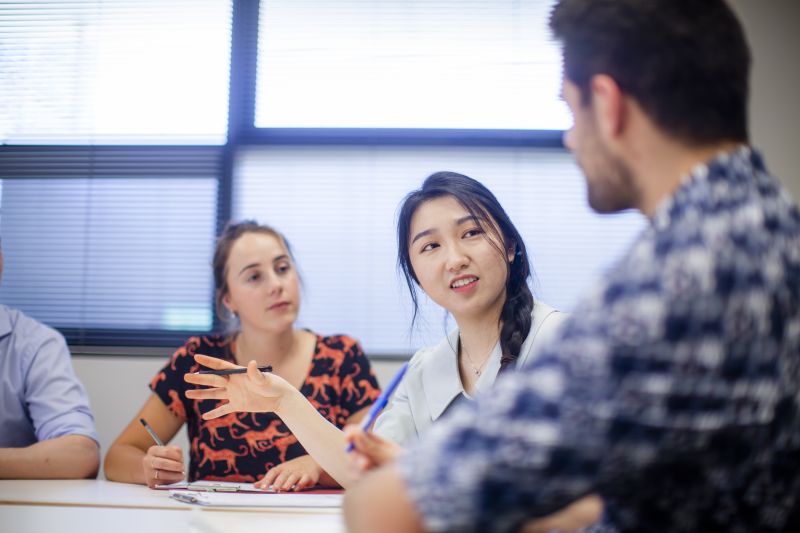
Physiotherapy Science Honours Program
The Department of Physiotherapy Honours program is designed to offer research projects for those who seek to gain experience in clinical physiotherapy science. Given the depth and diversity of our research teams, the department is able to offer project opportunities in a range of areas.
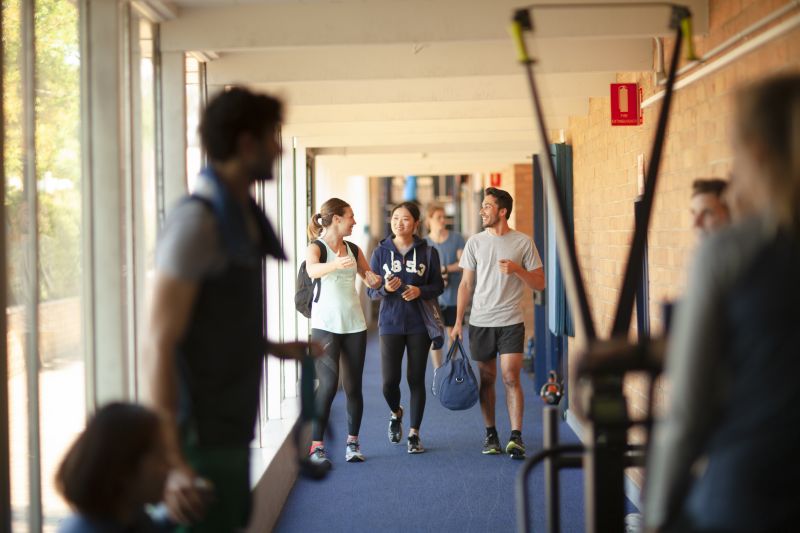
Student Placements
Clinical placements in the program are based in major metropolitan teaching hospitals, primary care, rural and international settings. Students who commence in our clinical programs will need to be prepared for upcoming experiences. Learn about what is needed including pre-placement requirements and getting prepared to go rural.
The Department's vision for engagement is to work with partners to further key priorities in physiotherapy knowledge.
-
Alumni
Our pride in our graduates and in their lives spent improving the health and well-being of others is matched by our desire to maintain strong connections with all who have passed through our doors.
-
Giving
We are grateful for the many ways in which our alumni and donors support the work of the Faculty.
-
Partners
The Department has strong collaborative partnerships with hospitals, health institutes, other universities and the physiotherapy profession.
-
Community
We aim to profile physiotherapy through dissemination of research findings to the community and our peers.

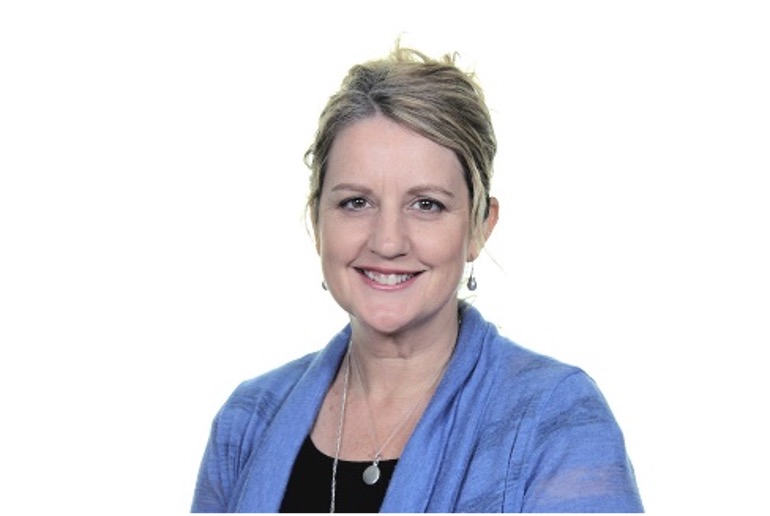
Welcome to the Department of Physiotherapy
Associate Professor Fiona Dobson, Head
Joining the Department of Physiotherapy in 2010, initially in a postdoctoral research role with the Centre of Health, Exercise and Sports Medicine and then in a teaching and research role in 2015, I was appointed as Head of Physiotherapy in 2022. My current research focuses on the role of physical activity and exercise for people living with chronic musculoskeletal health conditions, including hip and knee osteoarthritis. Click here to read more.

Centre for Health, Exercise & Sports Medicine
The Centre for Health, Exercise and Sports Medicine (CHESM) was established in October 2000 as a multidisciplinary centre within the Faculty of Medicine, Dentistry and Health Sciences, administered through the Department of Physiotherapy.